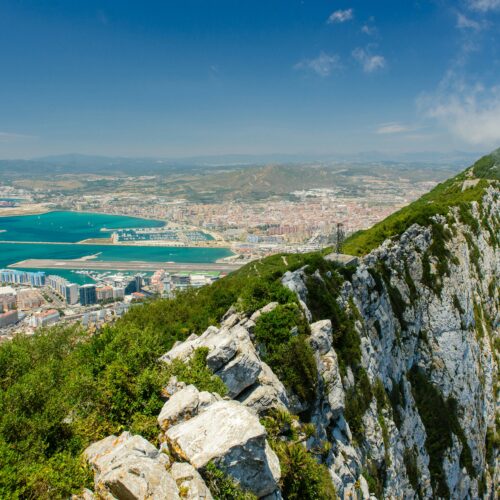
If you live in the UK or Gibraltar, you might be wondering if they’ll be joining the EU soon. There are always talks of it, and political leaders are in favour of it.
The issue is that it’s not as simple as just rejoining. There are so many terms and conditions, public and government votes, and backwards and forward negotiations that mean rejoining the EU is so far in the distance, even if it is on the cards.
Will Gibraltar ever rejoin the EU? Read on to find out.
Gibraltar’s Hopes Of Rejoining The EU
The Gibraltarians have always been pro-EU.
During the 2016 EU membership referendum, an astonishing 96% voted in favour of remaining. The region has historically relied on trade with Europe, making them more European than British. And if history had gone slightly differently, Gibraltar would be part of Spain and Europe.
With all the public support for remaining in the EU, Gibraltar still had to exit alongside the UK on January 31, 2020. It’s been nearly three years since Gibraltar left the EU, but they have not given up hope of rejoining.
The Gibraltar government has worked on negotiating terms to retain constant fluid relations with the EU, especially Spain. One of the strongest developments was on December 31, 2020, after the government announced a UK-Spain framework agreement. The deal lays the groundwork for Gibraltar to potentially join the Schengen Area. That would make a massive difference for people and goods to freely move in and out of Europe.
Still, negotiations are still stuck somewhere. Gibraltar has difficulty given its British identity. The discussions remain active, but at every stage of the agreement, another challenge pops up.
What It’ll Mean For Gibraltar
If Gibraltar leaves the said agreement, the infrastructure introduced and border control would be the first place Gibraltar would turn to resolve.
The situation for Gibraltar exists in a grey area post-Brexit. Passport stamps have been permitted by Spain for Gibraltar residents while Spanish workers have similar opportunities at their border. Any official border control could be lifted under a new deal with the EU.
An agreement similar to Schengen means returning to a time pre-Brexit. The said deal allows for more Spanish employees because most of Gibraltar’s workers are economically reliant on employing thousands from the country.
Besides improving free movement, a fresh deal could consolidate economic relations with the EU. Spain’s financial services, gaming, and tourism sectors were negatively impacted after Brexit. Stability and growth could come from rejoining the EU Customs Union or, at a minimum, aligning their trade practices.
What Changed When Gibraltar Left The EU
Things changed for Gibraltar dramatically after their exit from the EU. Some adjustments were managed with temporary deals, but there were unavoidable realities that needed confronting.
One of the greatest transformations came with the border being closed. Take note that before Brexit, travel between Britain and Spain was effortless. Now, while Spain has kept sweetening the pot with a relaxed border policy, the guarantee that it will last is dubious at best.
This issue of trade is suffering. Bringing goods into the country from the EU is getting more and more pernicious, which is extending costs as well as time.
Brexit has made Gibraltar more socially insulated. After pulling Gibraltar out of the EU in a retreat bid, the UK seems to have gotten over the whole Brexit issue, but for Gibraltar people, it is more complicated. Everyday life is filled with consequences.
Still, there are some benefits, like Gibraltar following a similar tax scheme to the UK (but more favourable). Tax in Gibraltar is low, and there’s no tax on capital gains and investments.
Benefits Of Being In The EU
Gibraltar thrived in the EU. The biggest benefit was the ability to move freely. Thousands of workers from Spain enter Gibraltar daily, turning its economy into medicine, building, and hospitality working. If these workers weren’t available, the Gibraltar economy would not function.
The EU offered Gibraltar relative stability. With benefits come risks, and as Britain opted for Brexit, Gibraltar companies were forced to abide by red tape compliance regulations. If Gibraltar’s eurosceptic regulations are set in place once more, it would quench the stricken appetite the region has had towards being a financial hub.
The same could be said about tourism. Before Brexit, endless European citizens travelled to Gibraltar with ease. Nowadays, border control poses unsettling limitations.
Do you think Gibraltar should rejoin the EU? Most people will say yes. And whilst negotiations are ongoing, it’s likely Gibraltar will remain out of the EU and under the control of the UK.
Collaborative Post
Great article!
I’m still not sure why the UK left the EU – it was a definitely a moment where we shot ourselves in the foot. If Gibralter can get the chance to join they should do it.
Totally agree!
I thought you might 🙂