
Starting a new career or going for a new qualification, in any industry, will always have you question everything. From future job prospects to the actual job descriptions and how you can develop professionally. These are all valid questions and normal for everyone to question. When it comes to the fitness industry, qualifications can sometimes be confusing. Below we’ve highlighted some answers to the most frequently asked questions when it comes to a gym instructor versus a personal trainer.
The Comparisons
Although both of these titles are for fitness professionals, there’re a couple of differences between what a Gym Instructor does and what a Personal Trainer does.



What Does A Gym Instructor Do?
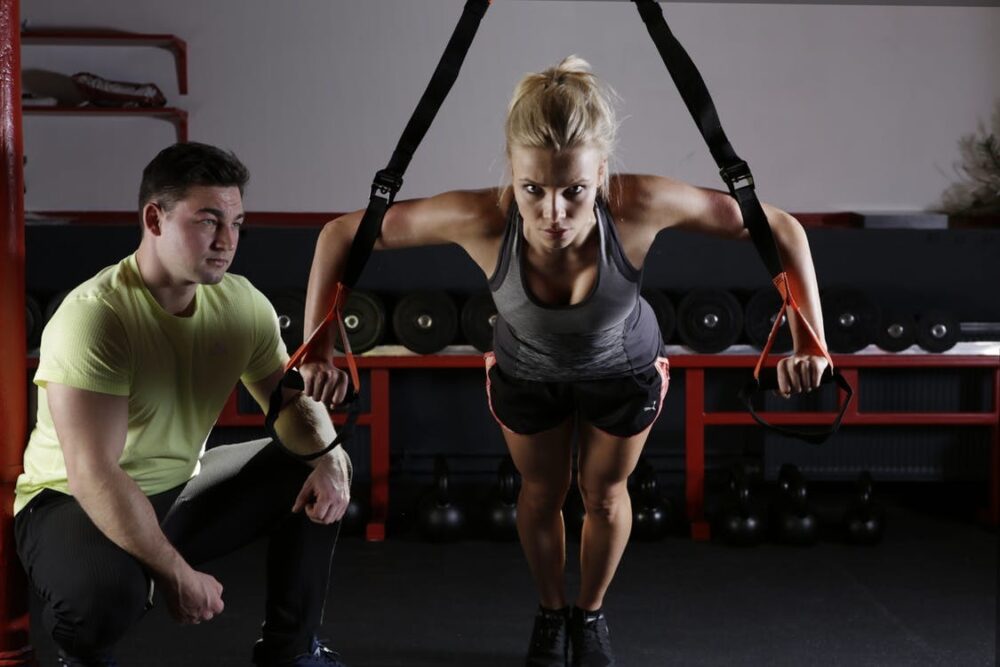
A Gym Instructor is usually employed by the gym and is mainly there to ensure members are using the equipment properly and safely. Their most important responsibility is to ensure gym members are using the correct technique when performing any exercises. If the wrong technique is used, injuries can occur easily.
Almost exclusively based at a gym, an instructor is there for everyone. Often volunteering to spot gym members who are performing slightly more difficult exercises such as lifting heavier weights. As a qualified Gym Instructor you would be able to run generic fitness classes. You can then complete courses that offer a wider range of discipline specific classes such as Circuit Training, Indoor Cycling.
For those that’re not quite sure whether personal training is the right career path. Having just the Gym Instructor qualification can give them a rough idea of what it’s like to work in the fitness industry.
What Does A Personal Trainer Do?
Much like a Gym Instructor, a Personal Trainer is there to help their clients. However they have a more personal approach, as the name would suggest.
Their primary focus is their client reaching their fitness goals. Being a qualified Personal Trainer means you have the knowledge and tools to work with a client 1-1. This will differ client to client but will usually be based around working out their current level of fitness. Through fitness testing, developing long term and short term goals for the client. Then developing a plan to assist the client to achieve these goals. You will also be taught on how to regularly assess the progress of your client. Making goals that can be adjusted accordingly to help maintain the motivation of the client. If the client wants to lose weight, the PT will work on developing a workout to turn that into reality.
As a qualified Personal Trainer you’ll also study nutrition. As a result you’ll be able to amend clients eating habits. Not only to help them to achieve the goals that you’ve both set for them.
Unlike gym instructors, a Personal Trainer typically operates wherever and whenever needed. Which could be at the gym, however it could also be in the clients back garden.
Having a PT work on a 1-1 basis, they’re also there to provide motivation. To ensure the client doesn’t give up. Developing this long-standing relationship is one of the key differences between that of a PT and a gym instructor. While the gym instructor will help you, their services are utilised on a more ad hoc basis.
Fitness Qualifications
Above all else, a Gym Instructor is a level 2 qualified fitness professional and a PT is qualified to level 3. They are different, yes, but they are both on the same track as becoming a Gym Instructor is the first big step towards becoming a Personal Trainer.
Collaborative Post
Leave a Reply