When it comes to cooking oils, the variety of options on the market can be overwhelming. Among the most popular choices are of course, extra virgin olive oil, canola oil and coconut oil. But which do you choose, and which is better for your health? In this article we will delve deeper into canola oil vs coconut oil, exploring their nutritional profiles, health benefits, and best uses in the kitchen.
How do they compare? Is one better for you than the other, or does it all come down to personal preference and cooking needs? Let’s dive into the details of canola oil vs coconut oil.
What Is Canola Oil?
Canola oil is derived from the seeds of the canola plant, a variety of the rapeseed plant and otherwise know as one of many vegetable oils. It’s a commonly used vegetable oil around the world because it’s so affordable, versatile, and has a mild flavour. Canola oil is typically processed through a method of pressing and refining to remove impurities, making it suitable for high heat cooking.
Nutritional Values Of Canola Oil
A tablespoon (about 14 grams) of canola oil contains:
- Calories: 120
- Fat: 14 grams
- Saturated fat: 1 gram
- Monounsaturated fat: 9 grams
- Polyunsaturated fat: 4 grams
- Omega-3 fatty acids: 1,200 milligrams
- Vitamin E: 2.4 milligrams (12% of the daily value)
What Is Coconut Oil?
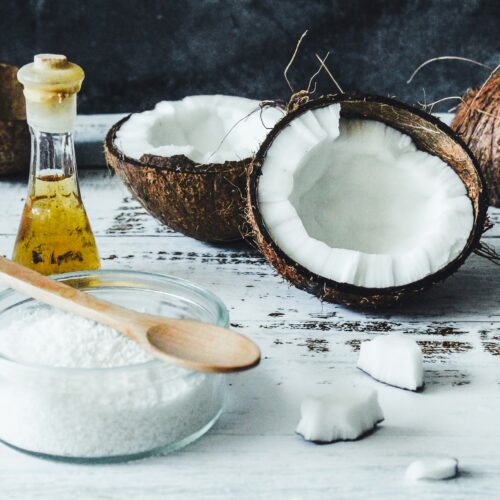
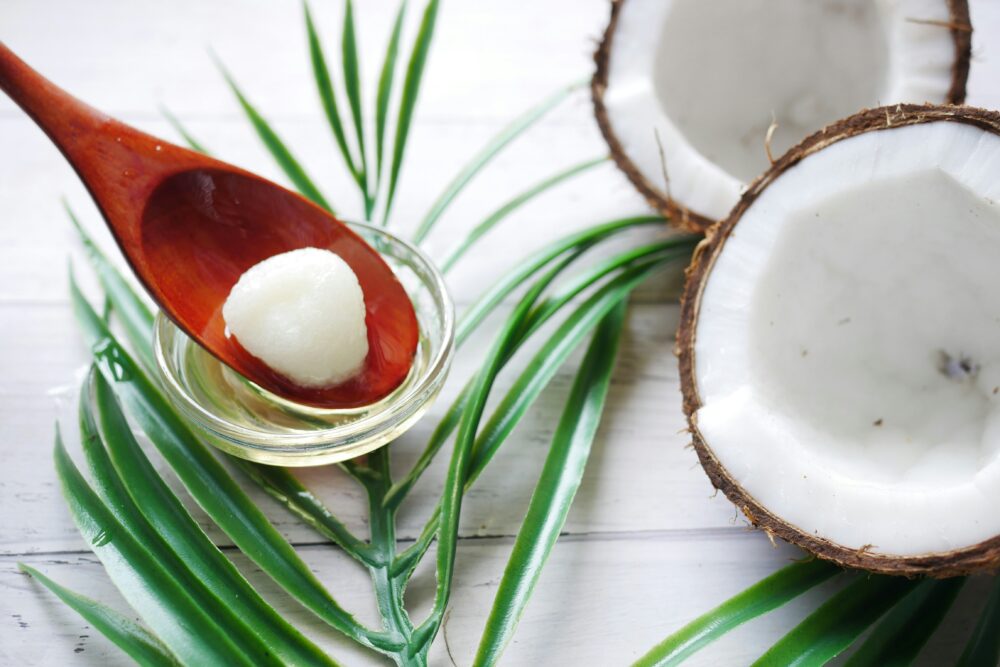
Unrefined coconut oil is extracted from the meat of mature coconuts. It has a rich, tropical flavour and is known for its distinct aroma and slightly sweet taste. Coconut oil comes in two main varieties: refined and unrefined. Refined coconut oil is processed to remove the strong coconut scent and flavour and is the unhealthier version – but often much cheaper.
While unrefined, or virgin coconut oil retains the natural taste and aroma and has little to no processing – which is what makes it much better for you.
Nutritional Values Of Coconut Oil
A tablespoon of coconut oil (about 14 grams) contains:
- Calories: 120
- Fat: 14 grams
- Saturated fat: 12 grams
- Monounsaturated fat: 0.8 grams
- Polyunsaturated fat: 0.2 grams
- Vitamin E: 0.2 milligrams (1% of the daily value)
Coconut oil is rich in saturated fats, which give it its solid form at room temperature. These fats are primarily medium-chain triglycerides (MCTs), which have been associated with a variety of health benefits, including increased energy expenditure and improved metabolism.
Why Is An Oil’s Smoke Point Important?
If an oil is used incorrectly, these potentially safe cooking oils can become carcinogenic and potentially cause cancer. So, it really is important to know what oils are good for you and how to use them. In this article we will go into more detail about each.
It’s really how it sounds. The smoke point of an oil is the point at which an oil begins to smoke. But why is this information so important to know? Oils used beyond their ideal smoke point will start to decompose and can turn toxic if consumed.
When the different oils begin to smoke, this is the point when it can cause inflammation and promote cancer growth in the body. So, the good ingredients, vitamins and antioxidants that were great for your body, have now turned into harmful free radicals and harsh toxins.
The smoke point of coconut oil is around 350°F (177°C) and the smoke point for canola oil is (around 400°F or 204°C).
Low, Medium Or High?
There are three main smoke points in oils…
- Low: 255-250°F
- Low/Medium: 250-325°F
- Medium: 325°F
- Medium/High: 325-450°F
- High: 450-500°F
Refined Or Unrefined Oil?
To understand whether refined or unrefined is better you will need to understand the extraction process.
Oils we use for cooking such as olive oil, coconut oil…etc, are extracted from seeds or nuts either through mechanical pressing (cold pressed) or through a petroleum hexane extraction. After the oil is extracted, it can be further refined through steam distillation to remove any leftover solids. This additional refinement in the extraction process allows the oils to be heated at much higher temperatures.
But which is better? Unrefined oils will always be much better and healthier for you than refined oils are. They have gone through less processing so will have more of their natural goodness in them. Plus, refined oils have gone through the petroleum hexane extraction (petroleum as in petrol for your car). This is why you should always check the label to make sure they are unrefined, but also that the oil is hexane free.
What Does Naturally Refined Mean?
Yes, it can get very confusing with the different terms companies use to try and trick us into thinking it’s all natural when it might not be. So, naturally refined means it’s somewhere in between refined and unrefined. If naturally refined is the only option, then that’s better than just refined.
Naturally refined oils are those that are cold pressed (as unrefined oils are generally) but then further refined to have any small particles removed and to increase the temperature to which the oil can be heated (it’s smoke point). By doing this, the oils will lose some of their goodness.
Simply speaking, naturally refined means extraction using a cold press process – which is more natural than the petroleum hexane process full of chemicals. Avoid anything that has the words “refined” on the label and you should be fine!
Canola Oil vs Coconut Oil
Health Benefits Of Canola Oil
On the surface, reading the nutritional information on canola oil might seem to be a healthy option. Due to its high level of monounsaturated fats which is known to help lower LDL cholesterol (the “bad” cholesterol) while potentially increasing HDL cholesterol (the “good” cholesterol).
Reading this you might think that makes it a better option, especially when you add in that its high omega-3 content contributes to overall cardiovascular health by reducing inflammation and supporting arterial function. Canola oil is also high in vitamin e and acts as a natural antioxidant.
That’s all great and it most likely will contain all of that good stuff when it’s first made. However, by the time it gets to you on the supermarket shelves, it’s not good for you at all! This oil isn’t very stable, which means changes in heat and light can cause the oil to de-stabilise.
In fact, many research studies over the years have shown that using canola oil often can actually cause oxidative stress and inflammation in the body. Increasing your risk of heart disease and elevated blood pressure. A study done on mice back in 2017 showed that consumption of canola oil impacted their memory in a negative way, which could lead to dementia in humans.
Health Benefits Of Coconut Oil
Organic, unrefined coconut oil has its fair share of health claims, and is loved by nutritionists around the world. Many of these claims focus on its high saturated fat content. The saturated fats in coconut oil are primarily MCTs (Medium chain triglycerides), which have been linked to improved fat burning and increased energy levels.
Some studies suggest that MCTs can enhance brain function, improve memory, and even help with weight loss by promoting satiety (the feeling of fullness). There’s also some evidence that coconut oil can help balance blood sugar levels. Personally, i take 1 teaspoon of MCT oil with my morning drink everyday for a natural boost of energy and mental clarity.
Coconut oil has a high level of saturated fat, much more than any other commonly used oil. While you may think this is a bad thing, more research is coming out to say it’s the opposite. High levels of saturated fats (processed in the right way) are actually good for you, and your brain will love you for feeding it high levels of healthy fats. The brain needs fats to function properly, to maintain good memory and to heal itself. If you lead a low fat diet, you’re starving your brain of what it needs most.
These days a “good” cholesterol level is around 150/200 mg/dL. However, years ago, a level of around 300 was seen as quite low. This was back when dementia, and other brain issues and diseases weren’t really a thing. Those who lead a high fatty diet, but who don’t consume sugars, or other refined, processed foods have much better brain health than those who don’t.
Other Types Of Oils You Could Try
Of course, these aren’t the only types of edible oils you could try in the kitchen. Some other healthy oils include…
- Avocado Oil – rich in healthy monounsaturated fatty acids (medium-high heat cooking)
- Sesame Oil – has a high smoke point, which makes it good for high-heat cooking – such as stir fries
- Peanut Oil (check to make sure you don’t have an allergy to nuts or nut oils)
- Flaxseed Oil – an excellent source of alpha-linolenic acid, an omega-3 fatty acid
- Grapeseed Oil – contains omega-6 polyunsaturated fatty acids and has a higher smoke point
- Sunflower Oil – low in saturated fat and an excellent source of vitamin e
- Extra Virgin Olive Oil – potential protective effect against Alzheimer’s, anti-inflammatory properties, can help lower your LDL (medium heat for cooking)
- Walnut Oil – a good source of omega-3 fatty acids and is made of primarily alpha-linolenic acid (lower smoke point)
- Organic Ghee – can be used for high heat cooking
Just make sure when you are buying these oils they are in glass containers and are listed as organic and cold pressed where possible.
Oils To Avoid
However, there are also quite a few types of oils you should try to avoid due to them being unhealthy for you. A good rule of thumb is that if you are buying oil in plastic containers – STOP! Some oils can react with the plastic bottles, plus the plastic won’t stop heat and sunlight from affecting the oils inside. So, what might have been great quality when it left the factory, by the time it’s got to your supermarket shelf, is no longer as good for you.
If the price of an oil seems to good to be true, it is! You aren’t buying a good quality oil and it won’t be healthy for you.
Oils to avoid include…
- Hydrogenated Oils (butter or margarine)
- Palm Oil
- Vegetable Shortening
- Safflower Oil – might increase blood sugar levels (diabetics should be very careful)
- Vegetable Oils
- Corn Oil
- Lard
- Soybean Oil
Which Oil Is Better For Your Health?
Incase it’s not obvious by now, coconut oil, as long as it’s unrefined and organic, is the much better option. If you have canola oil in your home and it’s in a plastic see-through bottle, throw it away immediately!
Coconut oil has a great flavour to it that can be used in both sweet and savoury recipes. Plus, it’s also a healthy source of MCTs and can be used as a great way to hydrate your skin if used in homemade skincare products. The use of coconut oil in skincare not only helps to hydrate your skin, it also gives it the essential nutrients it needs from the outside in. A versatile oil with a beneficial effect to your whole body.
Personally, it’s one of the plant-based oils i use on a daily basis, and one i add to meals to ensure my brain stays as young as healthy as possible.
What are your thoughts on canola oil vs coconut oil?
Great article, so interesting and informative.
Thank you!